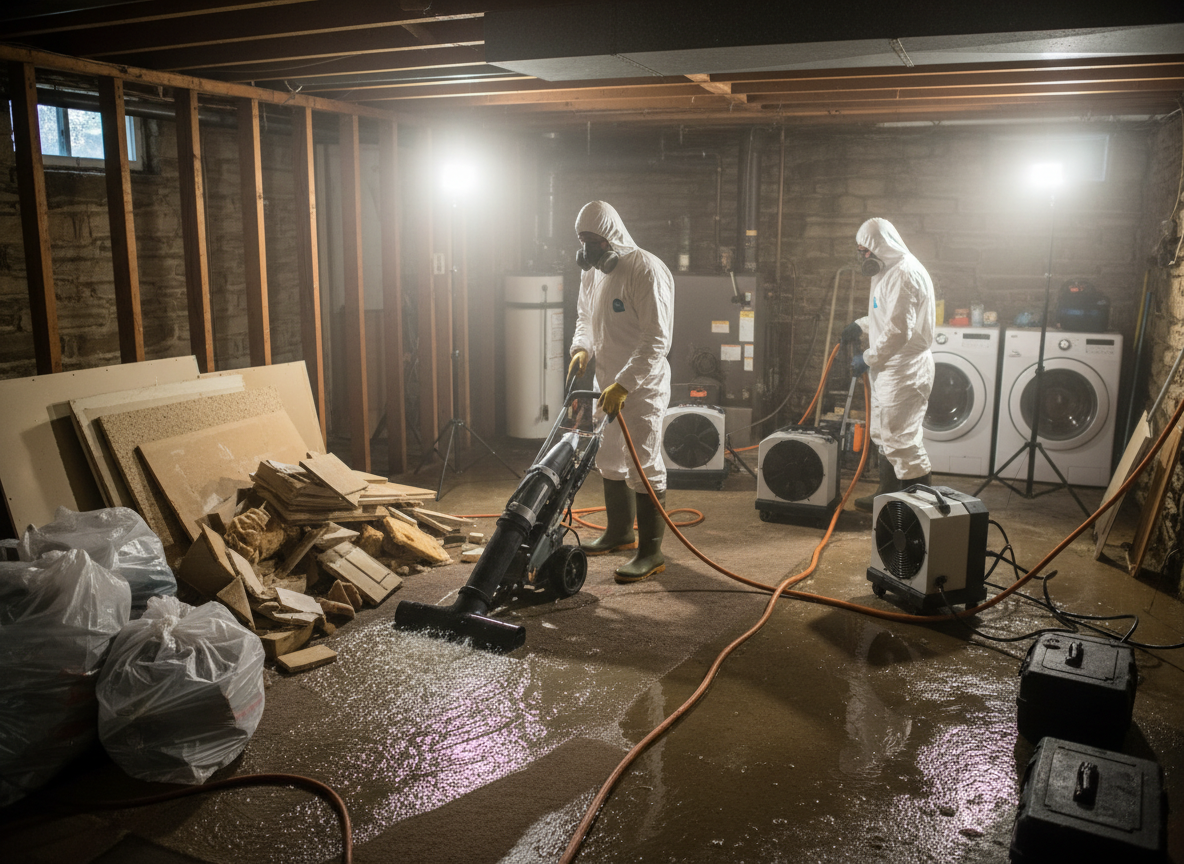
Yonkers homes built before 1960 in neighborhoods such as Getty Square and Nodine Hill often have galvanized pipes and knob-and-tube wiring that corrode or crack when winter temperatures drop below freezing. Cold snaps combined with the humid subtropical climate create repeated freeze-thaw cycles that push water into plaster walls and oak flooring. Technicians must cut access panels in lath-and-plaster ceilings and use moisture meters on multiple layers because hidden pockets behind brick party walls can feed mold within 48 hours.
River proximity along the Yonkers Waterfront and Philips Manor Hall area means groundwater seepage after heavy summer storms can enter basements through porous fieldstone foundations common in Westchester County. Extraction crews stage dehumidifiers on the first floor while pumping from below-grade sumps to avoid pulling moisture upward into finished spaces. In row houses near the Bronx line, shared walls require simultaneous drying on both sides or moisture migrates laterally and triggers disputes with neighbors.
Downtown Yonkers commercial buildings converted from mills frequently have concrete slab floors over clay soils that hold water for weeks. Removing carpet and underlayment reveals trapped moisture that standard fans miss, so crews install perimeter drying systems and monitor daily readings until readings fall below 12 percent. Hastings-on-Hudson commuters with split-level homes face similar issues when roof drains clog during leaf season, sending water into finished lower levels that contain electrical panels.
Technician insight
In Yonkers the thing that catches most people out with Emergency Water Damage Restoration is how quickly moisture travels through the brick party walls of 1920s row houses in Getty Square and Nodine Hill. One frozen pipe in a second-floor bathroom can saturate three neighboring units before anyone notices because the plaster never fully dries in our cold winters.
Frozen Pipe in Nodine Hill Row House
A January cold snap burst a galvanized line in a 1930s three-family home. Water traveled down through shared walls into two lower units. Crews isolated the line, extracted from all three floors, and ran drying equipment for six days until readings stabilized across the brick.
Emergency Water Damage Restoration Services We Offer
✓Burst Pipe Water Extraction
Locate and isolate frozen or corroded lines in older Yonkers housing stock, then remove standing water before it migrates into adjacent units.
✓Basement Flood Drying
Pump and dehumidify below-grade spaces common in Nodine Hill and Riverdale where clay soils and high water tables prolong saturation.
✓Sewage Backup Cleanup
Contain and disinfect Category 3 water from municipal lines that back up during heavy rains near the Yonkers Waterfront.
✓Ceiling and Wall Cavity Drying
Create controlled access points in plaster and lath walls to reach trapped moisture without unnecessary demolition in historic Getty Square properties.
✓Post-Flood Mold Containment
Apply antimicrobials and negative air during the drying phase to stop growth in humid summer conditions before reconstruction begins.
Emergency Water Damage Restoration Cost in Yonkers, NY
| Service | Typical Range | What Affects It |
|---|---|---|
| Initial extraction visit | $350–$650 | Depends on volume and whether basement or upper floor |
| Equipment drying package | $800–$1,800 | Per week; longer in winter pipe-burst jobs with plaster walls |
| Sewage cleanup add-on | $600–$1,200 | Includes biohazard disposal and disinfection |
| Wall cavity drying | $400–$900 | Per affected room in pre-1960 homes |
Ranges are typical for Yonkers, NY and confirmed with an exact written quote before any work starts.
How it works
- 1
Emergency Assessment
Arrive within hours, document moisture levels with meters, and map affected zones across multi-unit buildings.
- 2
Water Removal
Extract standing water using truck-mounted pumps and portable extractors suited for narrow Yonkers row-house access.
- 3
Structural Drying
Place air movers and dehumidifiers, then monitor daily until drywall and subfloors reach safe moisture content.
- 4
Sanitization And Containment
Apply EPA-registered products and seal off HVAC returns to prevent cross-contamination in attached homes.
Pricing
Pricing varies by scope, access, and duration of drying needed in older Westchester structures.